
KTM Duke 250: Aggressive looks, serious pace, and a few compromises
Coming from cruiser-style motorcycles, the KTM Duke 250 was a completely different experience. Sharp handling, a high-revving engine and an aggressive personality make it compelling—but it is not without compromises.
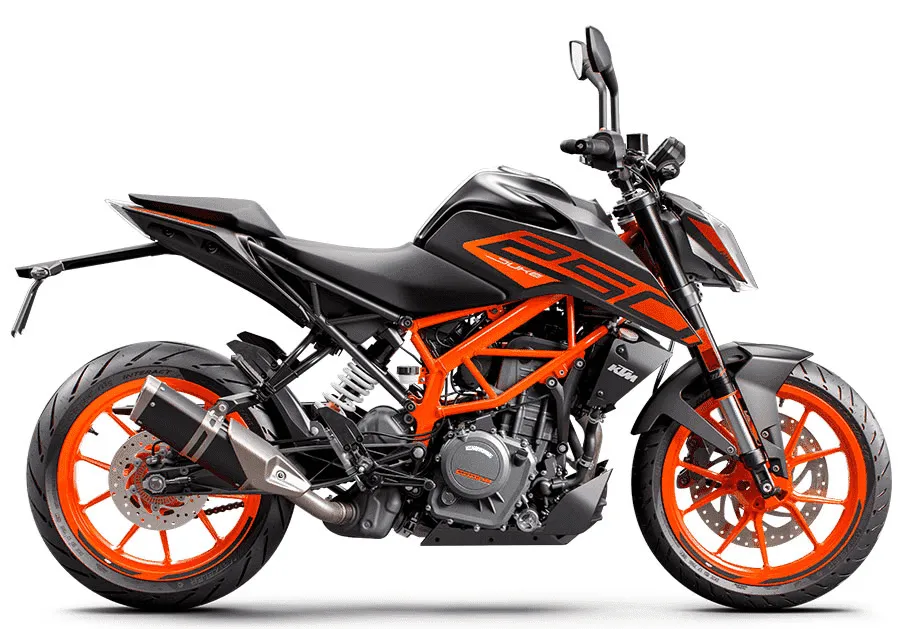
Some motorcycles make an impression before you even turn the key. The KTM Duke 250 is one of them.
Coming from motorcycles such as the Honda CB350, the Duke was a completely different experience for me. Its aggressive styling, lightweight feel and high-revving engine give it a character that is difficult to ignore. But it also comes with a few compromises.
Aggressive by design
The first thing that caught my attention was the front end. It looks sharp, futuristic and, in my opinion, almost Transformer-like.
Yes, there is plenty of plastic bodywork, but the motorcycle does not feel cheaply made when you are sitting on it. The switchgear, handlebar and clutch all felt well put together, and I had no complaints about the overall perceived quality.
Surprisingly comfortable
For a naked sports motorcycle, I found the Duke 250 surprisingly comfortable. The seat felt supportive, while the handlebar position creates only a slight forward lean.
It is definitely more aggressive than a cruiser, but nowhere near as demanding as a fully faired sportbike. I did not ride with a pillion, so I cannot comment on actual passenger comfort, although the relatively high pillion footpegs could become uncomfortable on longer journeys.
The TFT gets it right
I did not explore every connectivity feature in depth, but the TFT display left a strong impression. Navigating through the menus using the handlebar-mounted controls was simple and intuitive.
The Street and Track riding modes caught my attention, and the display's performance-focused graphics fit the Duke's aggressive personality without making the system feel unnecessarily complicated.
Where the Duke really comes alive
The Duke 250 produces around 31 PS and 25 Nm, paired with a six-speed gearbox. Coming from a torque-rich, long-stroke motorcycle, the biggest difference I noticed was at lower revs.
Below approximately 4,000–4,500 rpm, the Duke felt relatively subdued. In stop-and-start traffic, riders accustomed to stronger low-end torque may find themselves working the throttle and clutch a little more.
But once the revs climb past that point, the motorcycle's character changes. The engine becomes considerably more engaging and feels eager to keep pulling through the higher rev range. The throttle response was quick, and the overall acceleration felt impressive for this segment.
A gearbox that impressed me
The six-speed transmission and quickshifter were among my favourite parts of the experience. Shifts felt quick and smooth, particularly when riding spiritedly.
The gearing does require some familiarity, especially when downshifting. But once you understand the engine braking and the way the motorcycle responds, the transmission adds significantly to the Duke's performance-oriented experience.
Light, flickable and confidence-inspiring
The Duke 250 feels light and easy to manoeuvre. Whether changing direction, moving through traffic or taking corners, the motorcycle felt responsive and planted.
The suspension is definitely on the firmer side. On poor roads, bumps and speed breakers, the ride can feel uncomfortable. But at higher speeds and through corners, the motorcycle feels stable and confidence-inspiring.
The brakes were equally impressive. I had no concerns braking from around 80 km/h—the motorcycle felt composed and the brakes provided a strong, reassuring bite.
What about vibrations and heat?
One thing I noticed immediately was vibration. You can feel it through the handlebar and footpegs, with some vibration also reaching the seat. It is not something I could overlook during my experience.
Engine heat, however, is something I cannot properly judge yet. I rode the motorcycle on open roads and was barely stationary, so I did not spend enough time in traffic to assess how much heat reaches the rider.
Visibility and fuel economy
The stock mirrors provided good visibility behind me, and the dashboard did not interfere with my line of sight.
As for fuel economy, my estimate for a mix of city and spirited riding would be around 22–25 km/l. However, this is only a prediction based on my experience and riding style—not a measured fuel-economy result.
What does it cost?
According to a showroom quotation I obtained from Orange Motorrad, KTM Lullanagar, Pune, the Duke 250 was quoted at the following price:
| Price component | Amount |
|---|---|
| Ex-showroom | ₹2,27,032 |
| RTO | ₹27,073 |
| Insurance | ₹14,035 |
| PDI + Leg Guard | ₹2,437 |
| On-road price | ₹2,70,577 |
Prices can change, so buyers should always obtain an updated quotation from their local dealership.
The verdict
I really liked the KTM Duke 250. It is aggressive, quick, lightweight and engaging to ride. The high-revving engine, smooth transmission, handling and braking all make it a compelling package.
But it is not perfect. The low-end torque may disappoint riders coming from long-stroke motorcycles, vibrations are noticeable, and the firm suspension can be uncomfortable on poor roads.
Still, if you are looking for a motorcycle that feels sharp, encourages spirited riding and offers a feature-rich package at around ₹2.7 lakh on-road in Pune, the Duke 250 is absolutely worth considering.
The Duke 250 rewards you when you ride it the way it wants to be ridden. And for the right rider, that could make it one of the most exciting motorcycles in its segment.